Internet-of-Things and Sensing System Research Activities at University of Pau, France
NEWS ON PEPR AGRIFUTUR
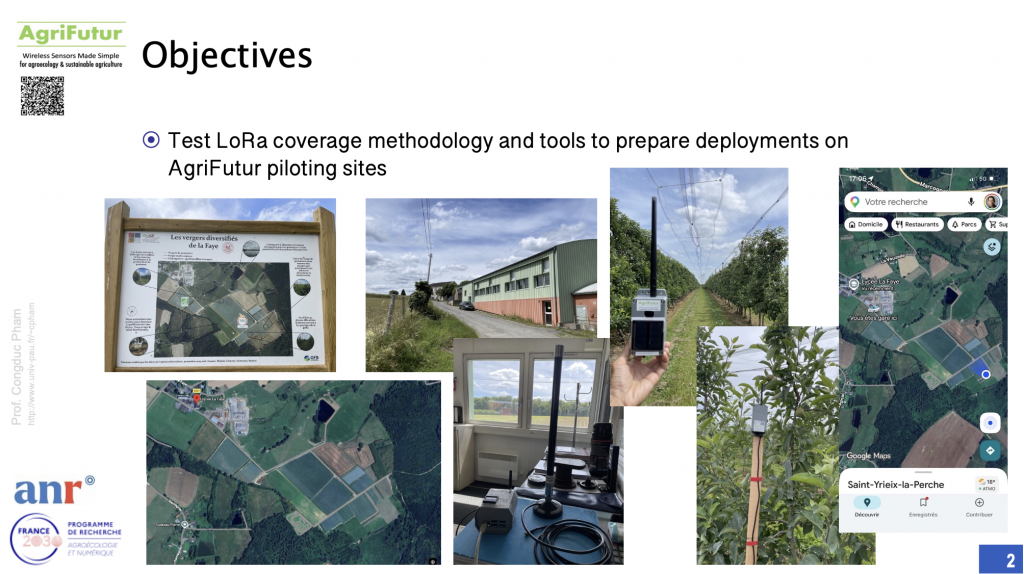
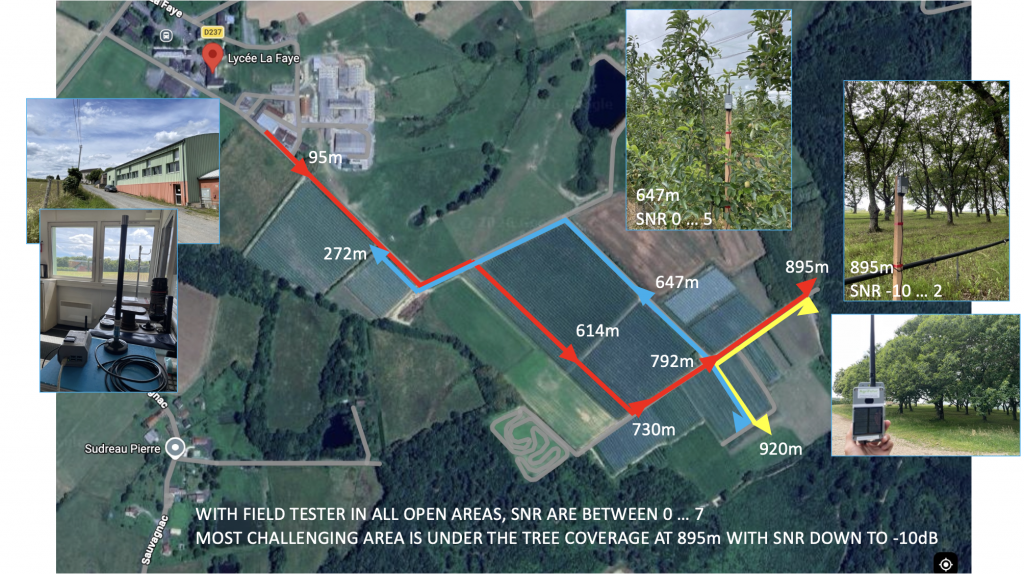
Jun. 9-10, 2026. UPPA conducted a test session at the Lycée La Faye located at Saint-Yrieix-la-Perche, France, to validate the sensor-gateway platform that will be deployed in AgriFutur piloting sites. End-device placement, antenna placement and transmission coverage were tested in representative scenarios. Data reception at gateways are from good to very good. We are confident that the sensor-gateway platform can be successfully deployed in other AgriFutur piloting sites.
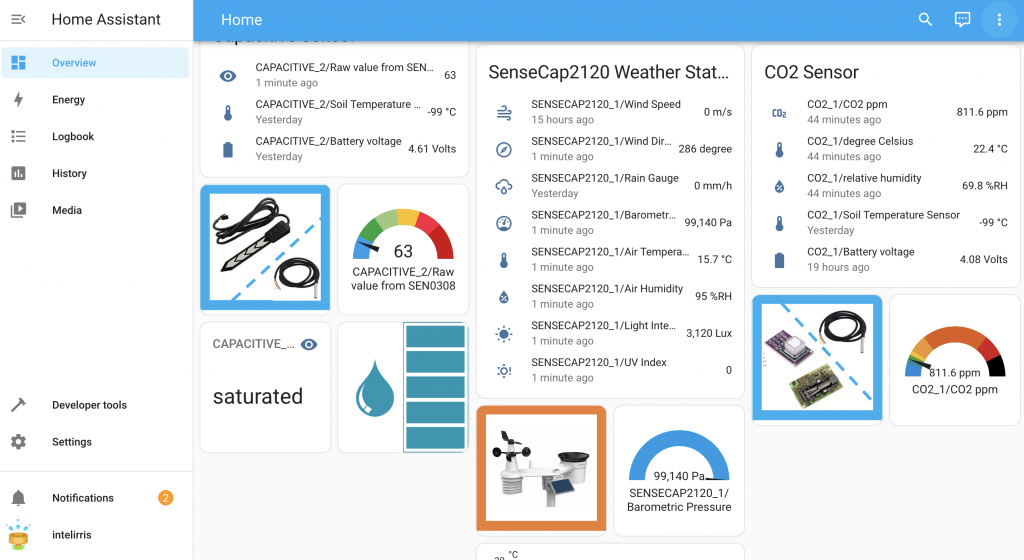
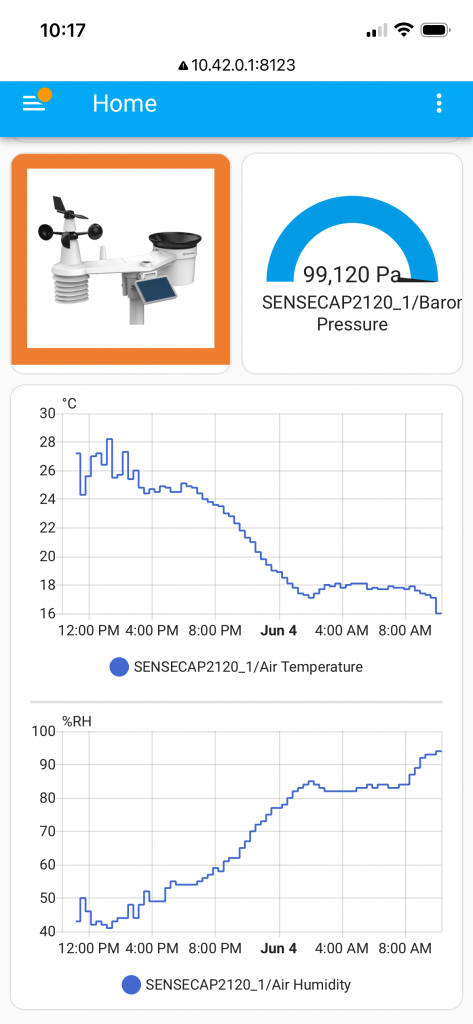
Jun. 3rd, 2026. The integration of commercial LoRaWAN sensor devices that are mainly commissioned in OTAA mode (Over-The-Air-Activation) is now well supported by our customized, edge-enabled gateway, extending the ecosystem with a large variety of sensors. The embedded Chirpstack Network Server can handle the whole join procedure without any Internet access for out-of-the-box deployment in remote areas. We illustrated with the Seeed Studio SenseCap2120 Weather Station that can be deployed for monitoring environmental conditions in AgriFutur. Of course, integration in Home Assistant dashboard is automatically realized as Home Assistant is confirmed to be the integration platform for the IoT gateway we develop for AgriFutur.
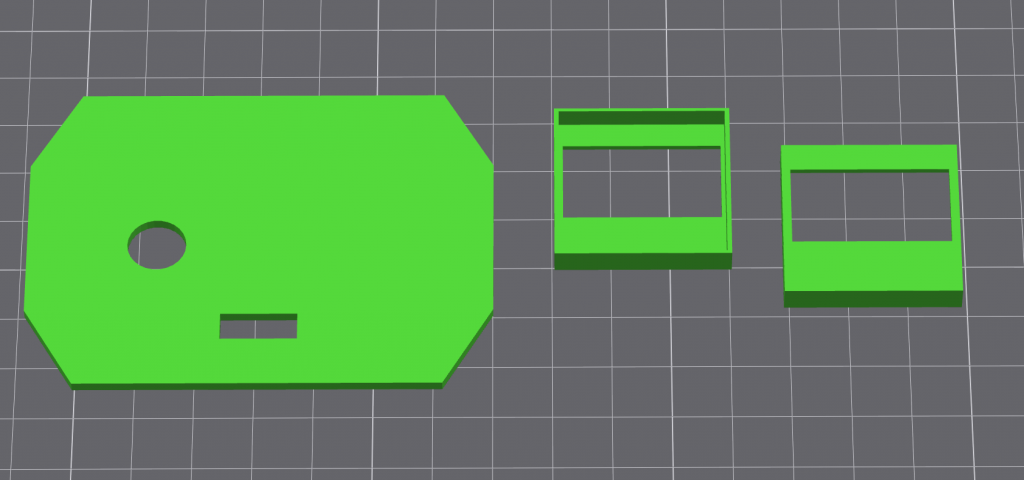
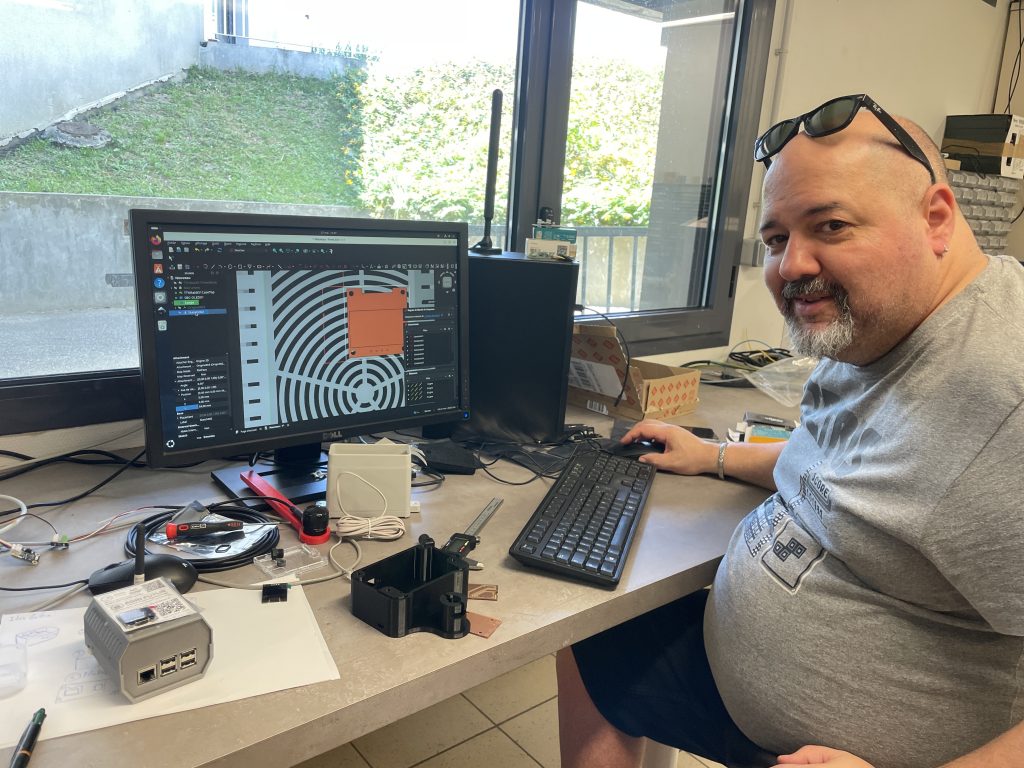
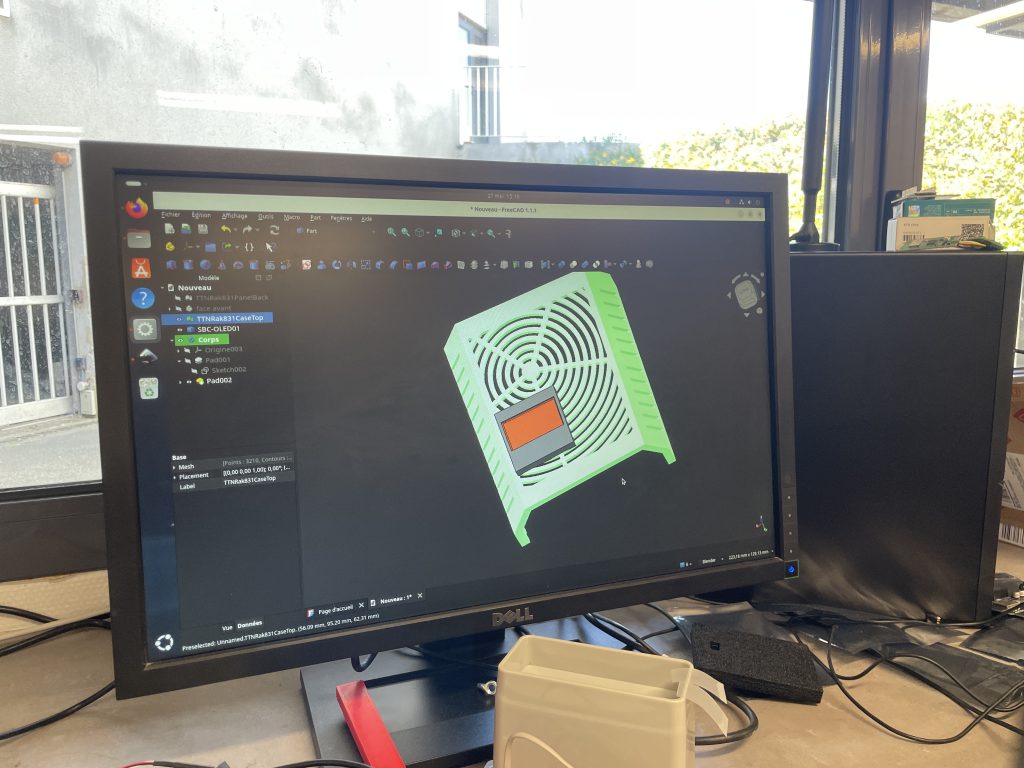
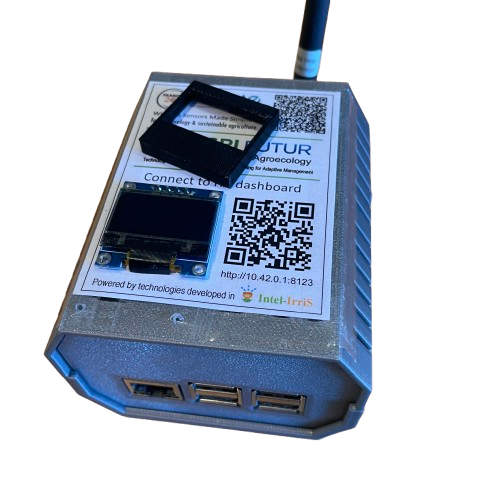
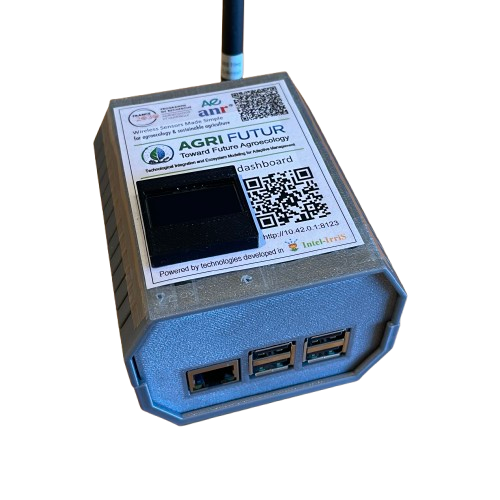
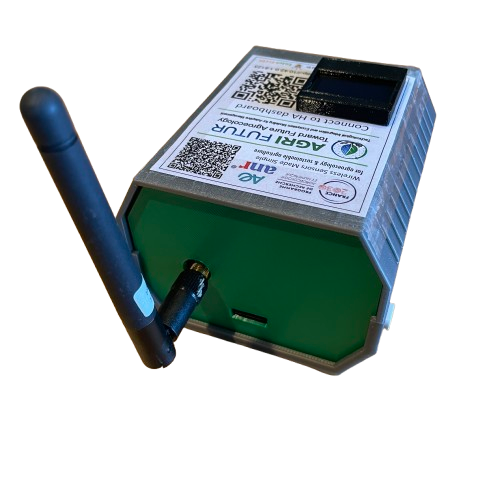
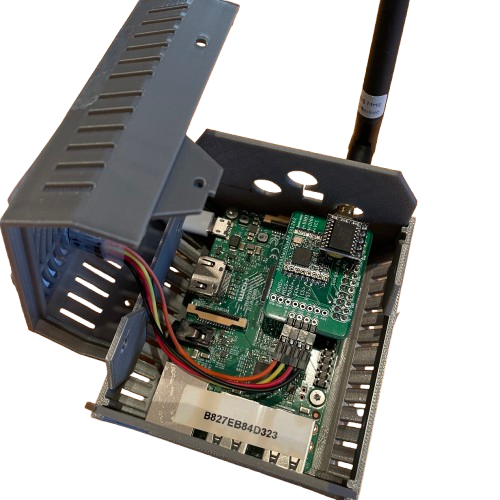
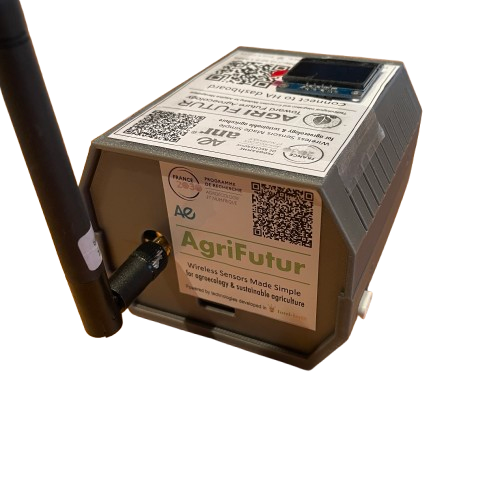
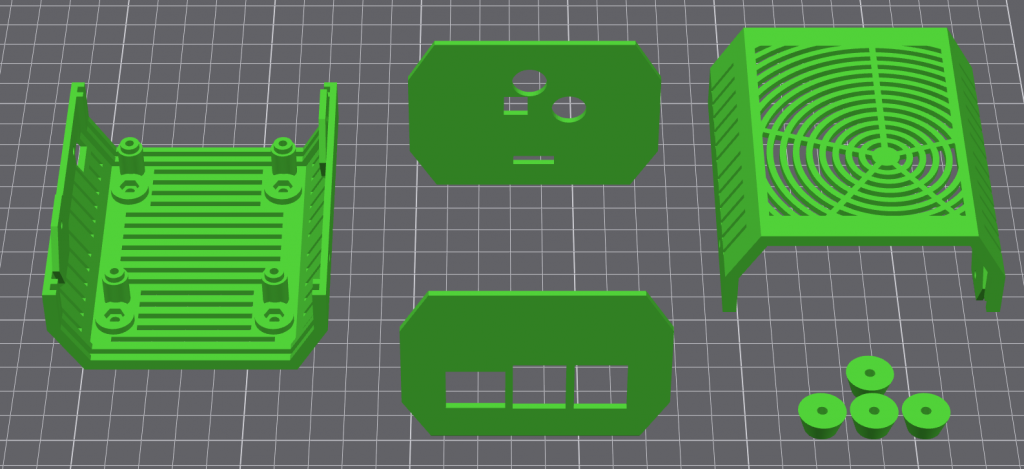
May 27th, 2026. With the help of Cédric Arrabie from the UPPA’s LATEP laboratory, a new front panel with the hole for the antenna connector of our LoRa RFM95W/RFM96W breakout board has been designed to replace the initial design for the now obsolete RAK831 concentrator hat. In addition, a plastic cover for the OLED screen has also been designed in some minutes by my colleague, a true expert in FreeCAD design! All these resources are available on the UPPA’s AgriFutur GitHub!
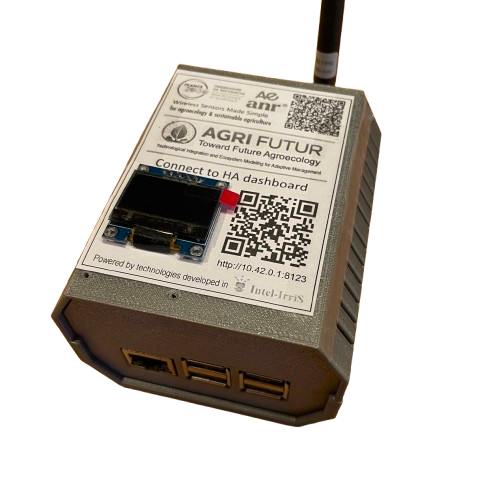
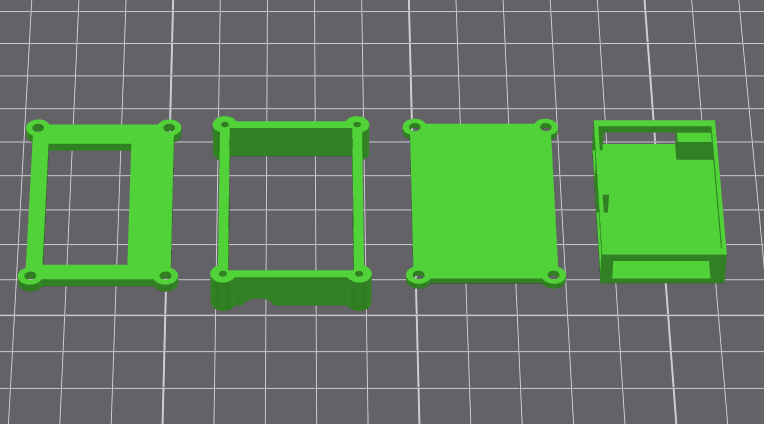
May 21st, 2026. Testing a new 3D printed enclosure for our customized gateway from an open project and available on Thingiverse. Very promising in term of adaptability and flexibility: several LoRa radio configurations can be built: single-channel with an RFM9x module using our simple RFM9x breakout board or multi-channel with a RAK2245/RAK5146 radio concentrator.
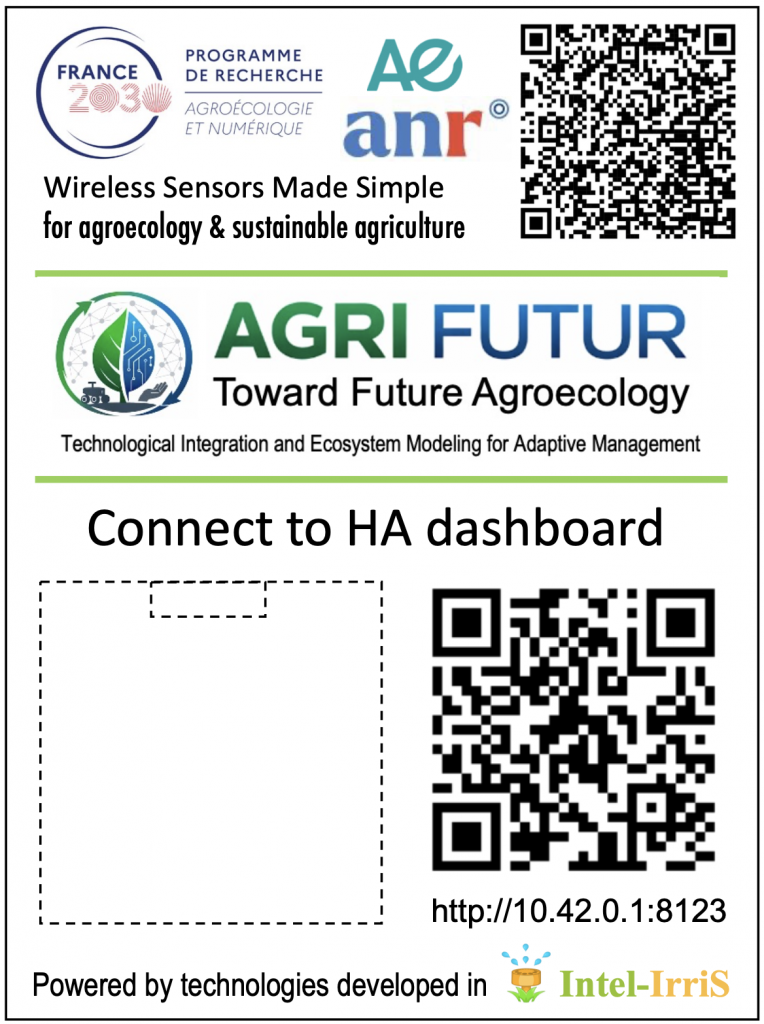
We took this opportunity to design a new 6cm x 8cm sticker to put on the top cover of the gateway with the AgriFutur project identity. Download the 6cm x 8cm sticker in .pdf format or the 6-sticker panel.
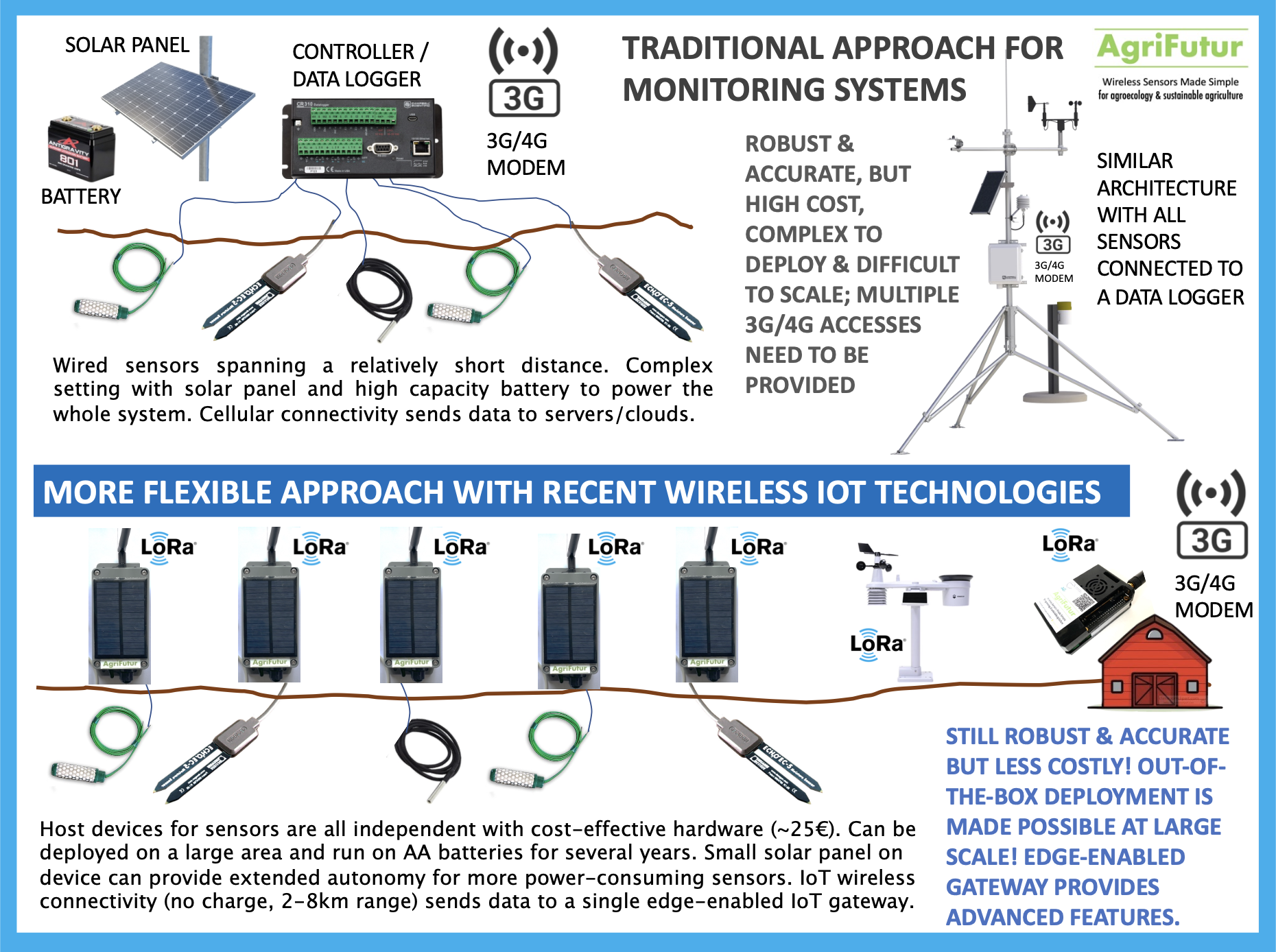
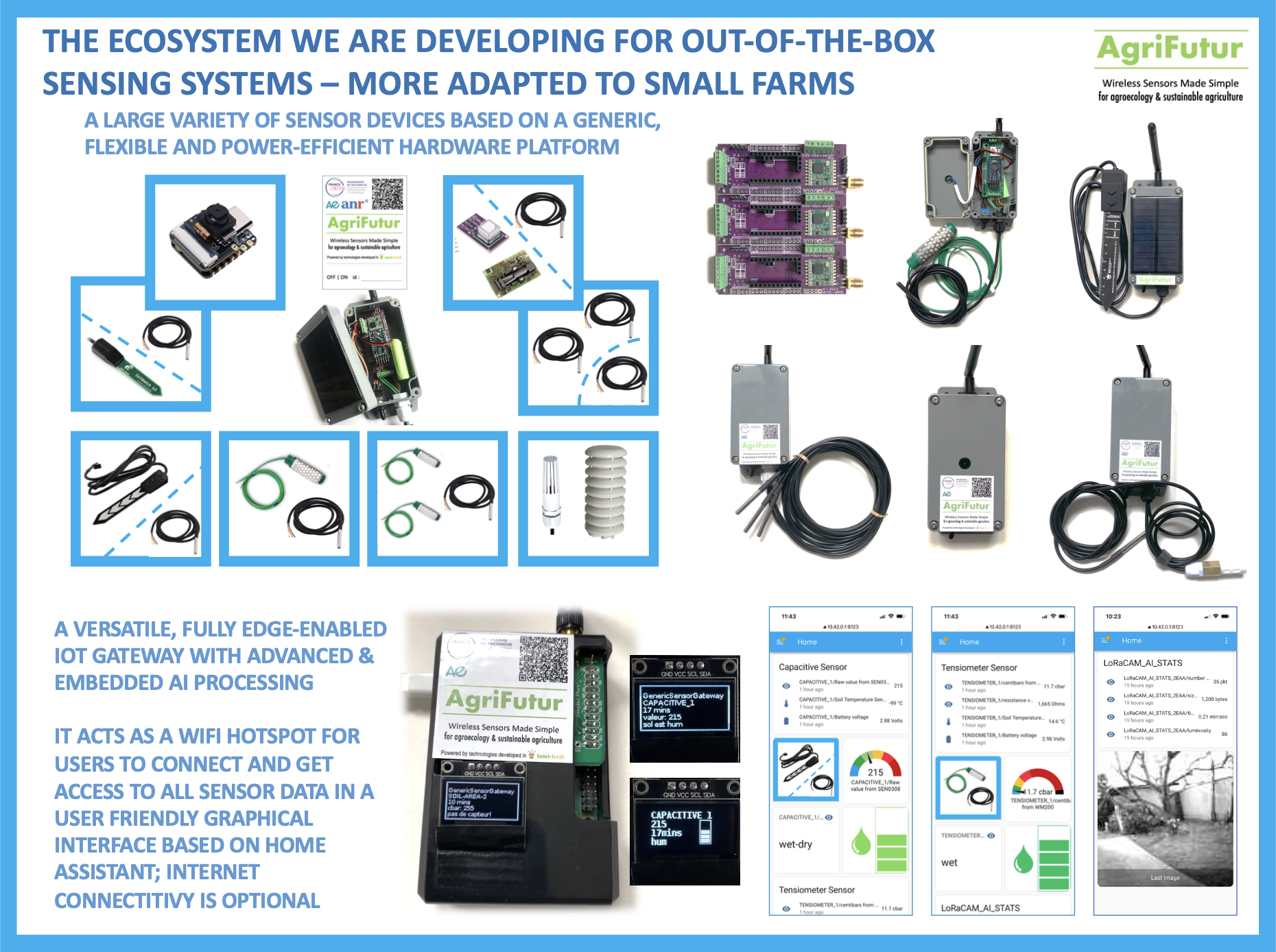
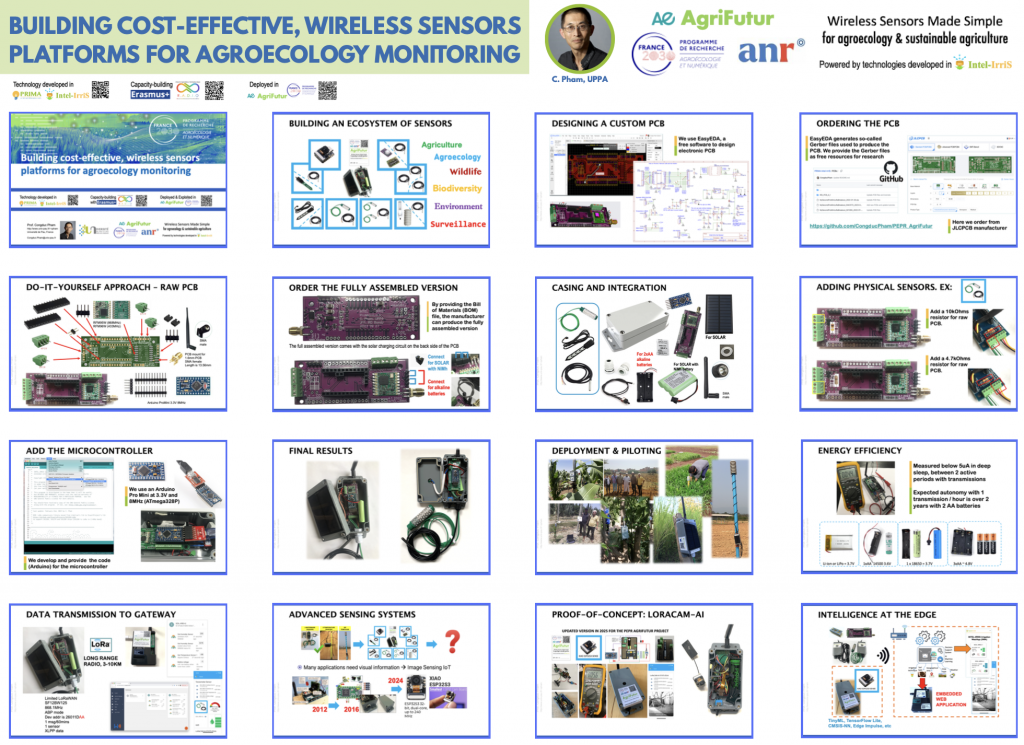
May 15th, 2026. In order to better illustrate how new sensing infrastructures are deployed with recent technologies compared to more traditional approaches, we produced these 2 slides that can be printed as posters. They complement the A0 poster on how to build cost-effective sensing systems based on the open & generic sensing platform initially developed in thePRIMA INTEL-IRRISproject.
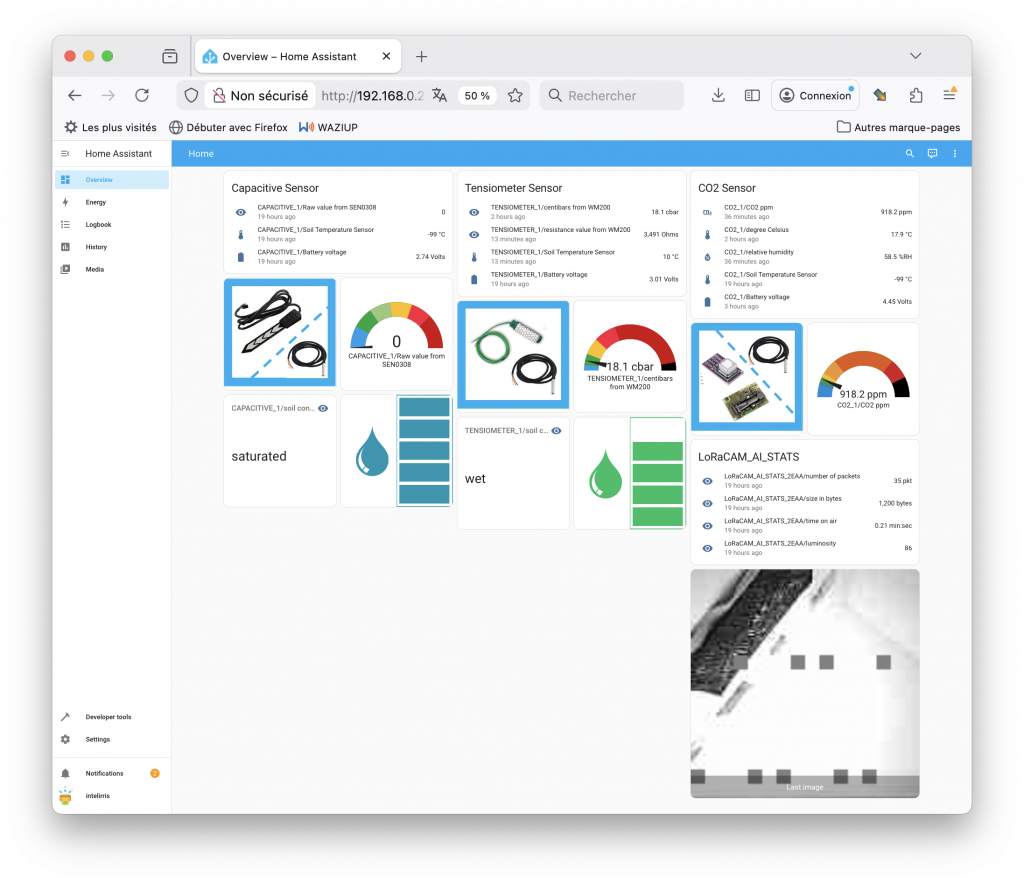
Mar. 9th, 2026. Home Assistant is confirmed to be the integration platform for the IoT gateway developed for AgriFutur. We developed on top of the WaziGate gateway a dynamic device creation and integration mecanism to enable automatic integration of new devices in the embedded HA platform. In addition, to the auto-configuration mechanism that automatically update and/or configure the gateway on boot for specific deployment settings, the automatic integration of new devices in HA makes out-of-the-box deployment in piloting sites even easier! Check all the new developments and the last commits on the UPPA’s AgriFutur GitHub.
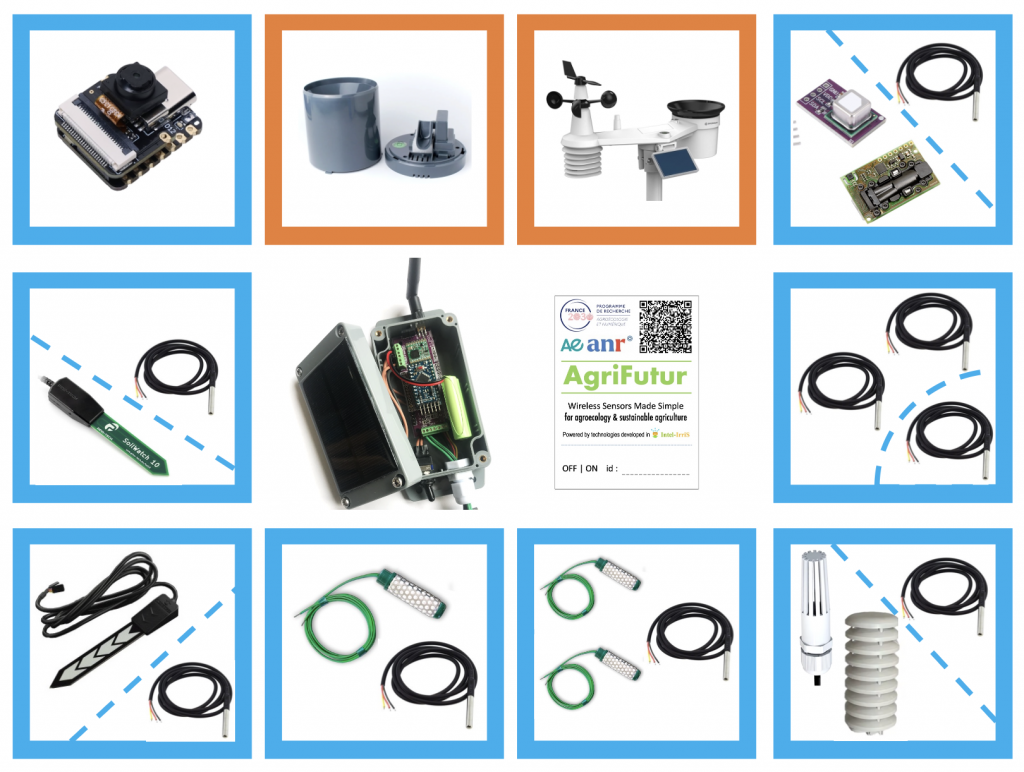
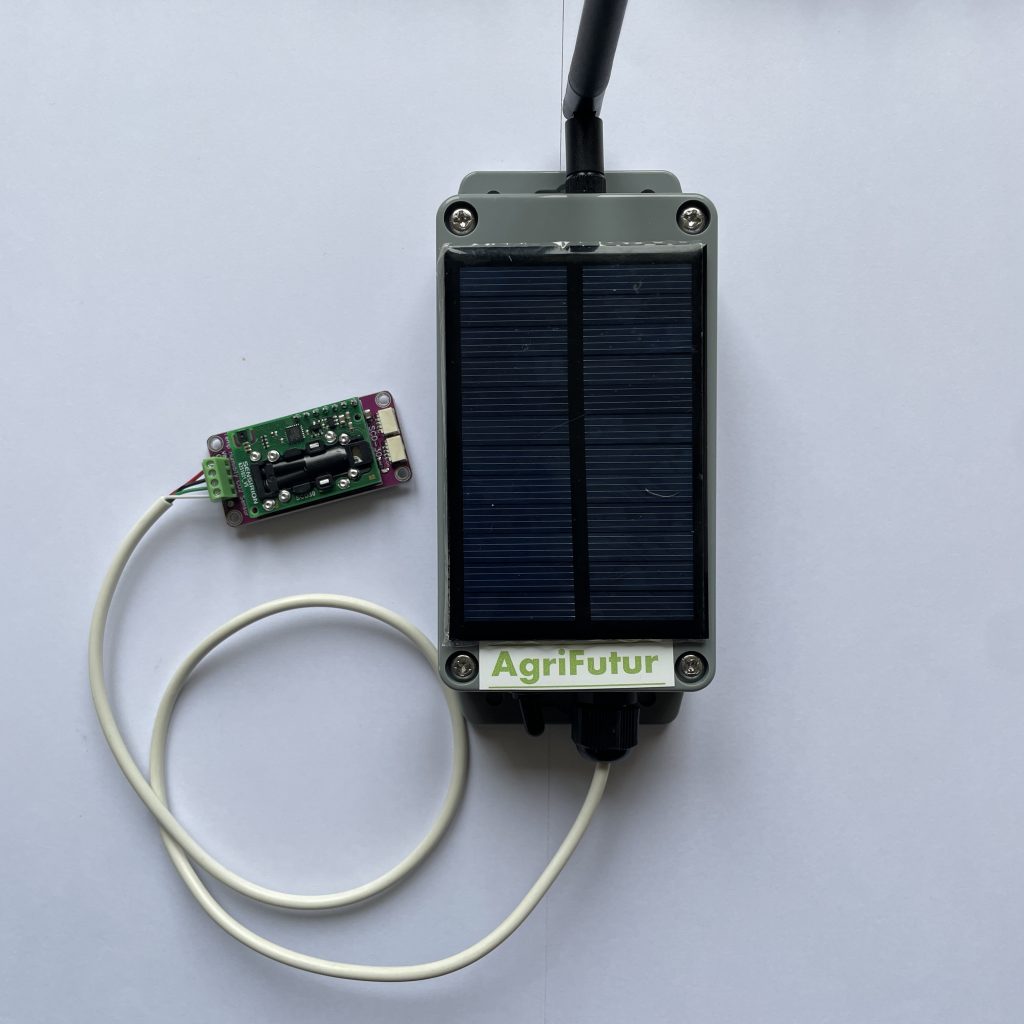
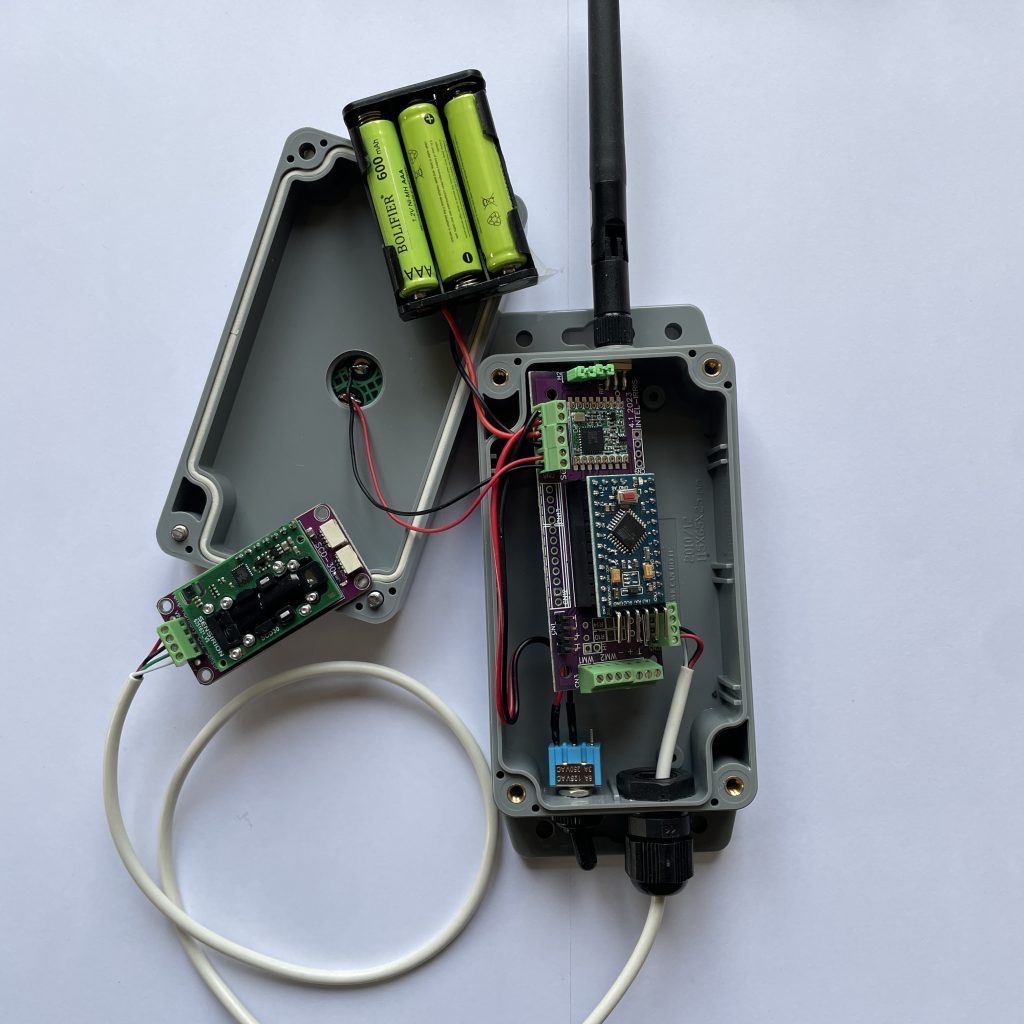
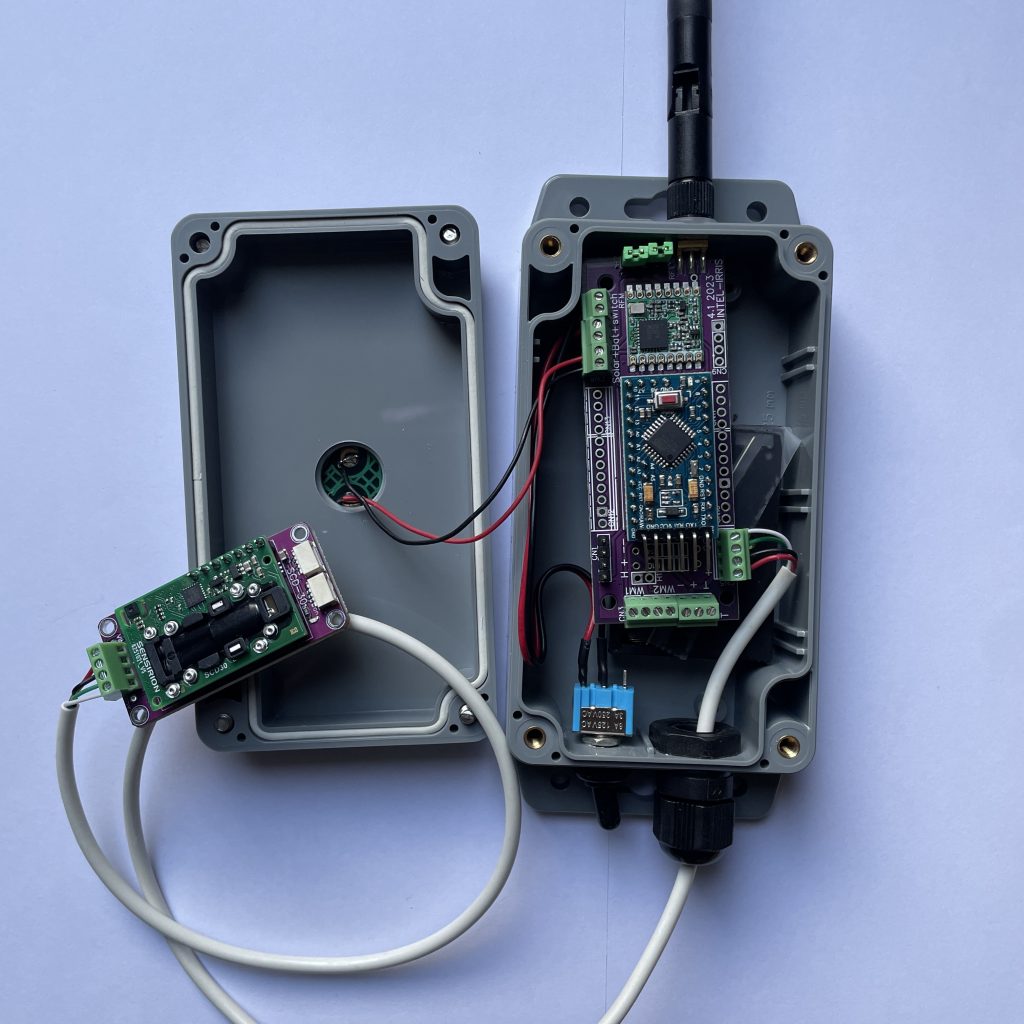
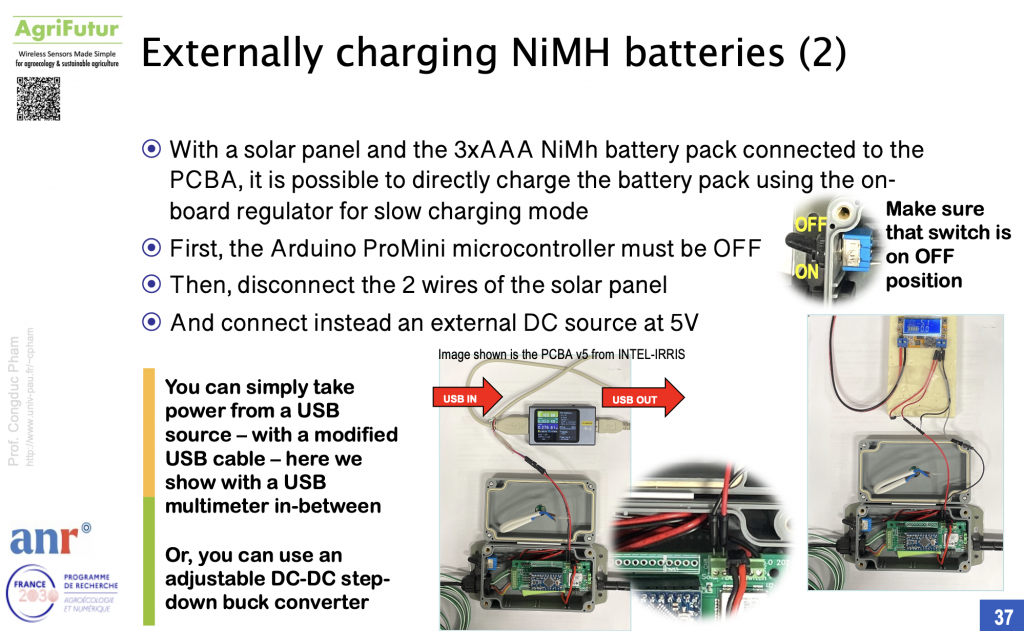
Feb. 17th, 2026. The code for the CO2 sensor device based on Sensirion SCD30/40 sensor is now fully debugged and functional! The AgriFutur’s GitHub repository with the code and the tutorials has been updated. As the CO2 sensor is quite energy consuming, it is advised to use a solar panel with 3xAAA NiMh batteries to power the device. The application for this sensor is continuous monitoring in a closed chamber of soil respiration to quantify the impact of agroecological practices on soil quality. With the generic sensor platform, which offers a wide range of powering capabilities, building and deploying such sensor becomes straightforward!
Feb. 2nd, 2026. The tutorial to build the Generic Sensor Node have been updated to include a lot of useful information on how to efficiently power your devices! Get all the tutorials from the UPPA’s AgriFutur GitHub repository.
Jan. 27th, 2026. Design of a poster illustrating all the steps to build cost-effective sensing systems based on the open & generic sensing platform developed in the PRIMA INTEL-IRRIS project and now deployed and exploited in the AgriFutur flagship project of the PEPR program. Download the A0 poster in .pdf. You can also download the set of slides that were used for the poster.
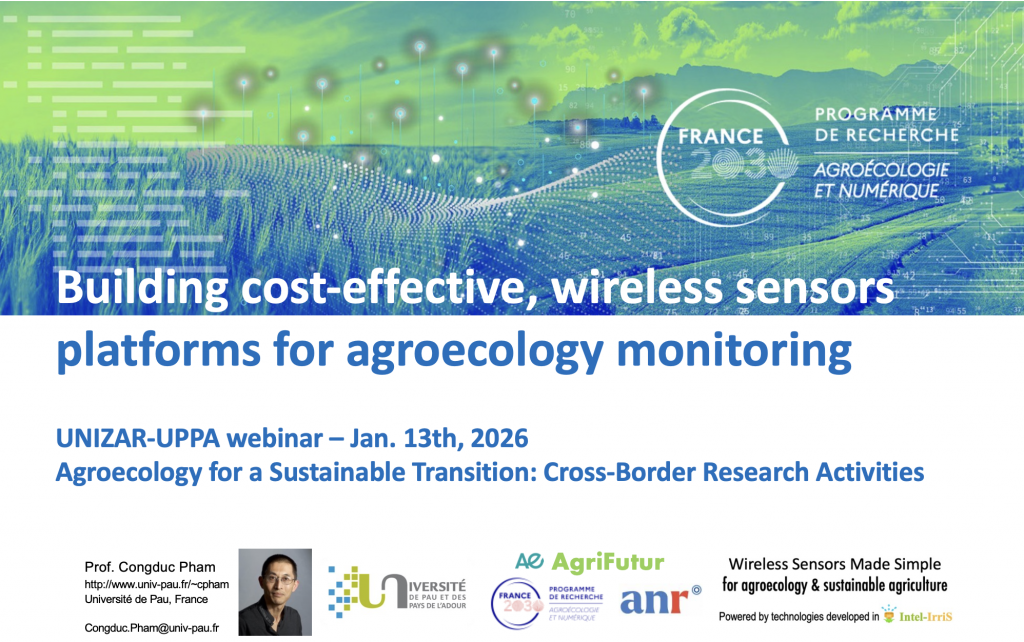
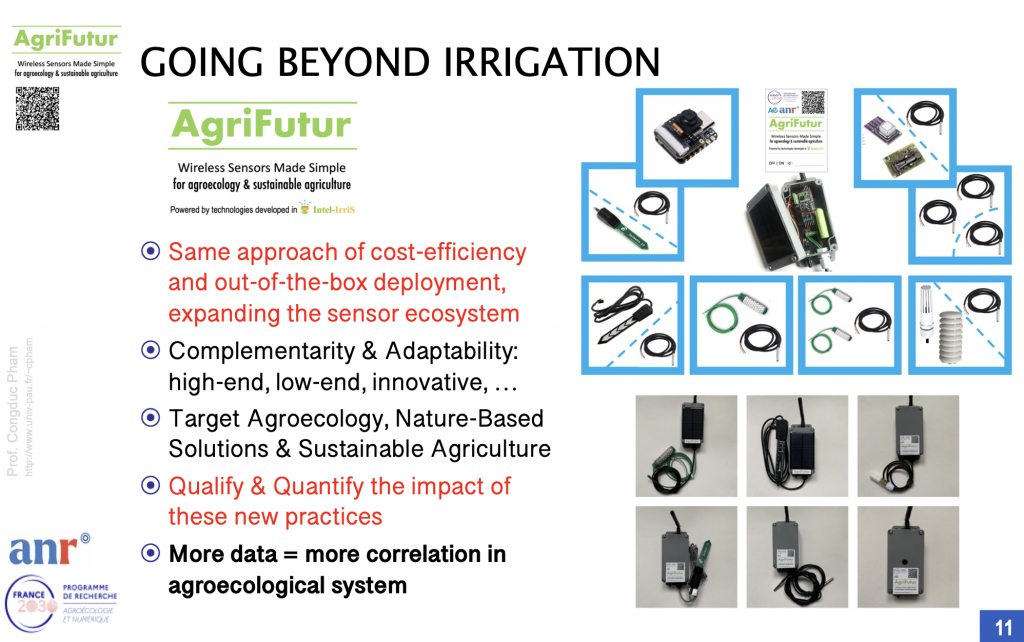
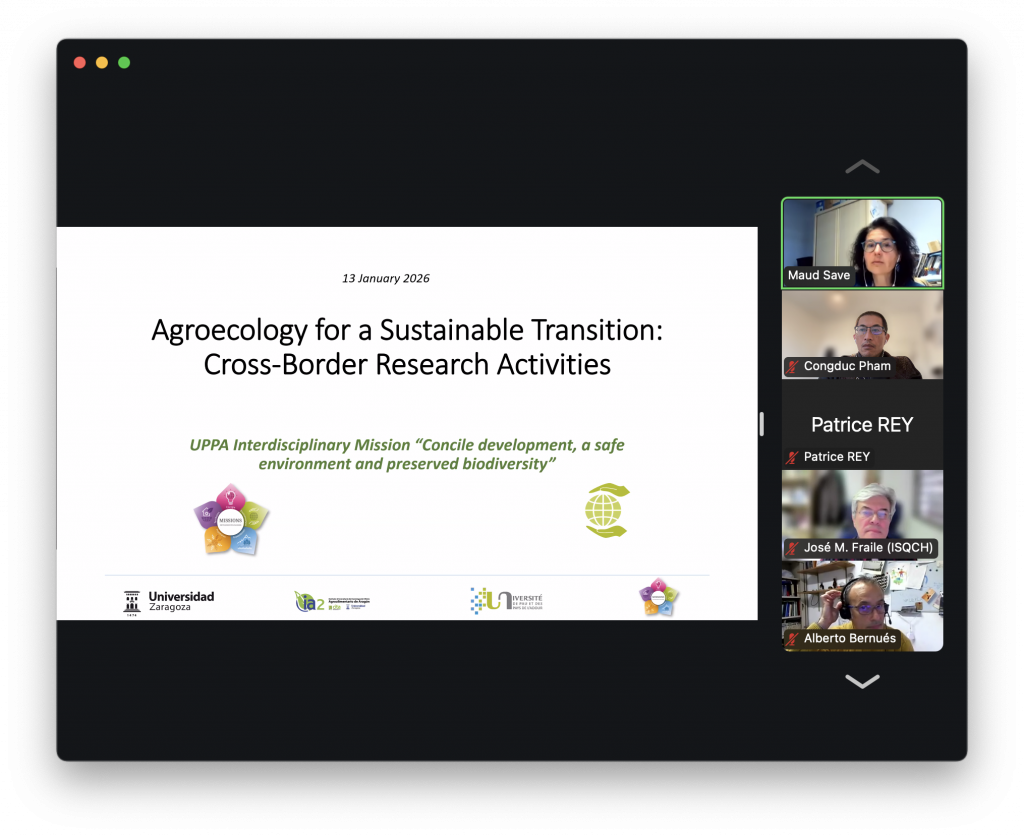
Jan. 13th, 2026. Prof. Congduc Pham presented UPPA’s activities on cost-effective, wireless sensors platforms for agroecology monitoring at the UNIZAR (Spain)–UPPA (France) Webinar on “Agroecology for a Sustainable Transition: Cross-Border Research Activities”. It was a great opportunity to get to know all these projects, initiatives and activities. Get the slides in .pdf.
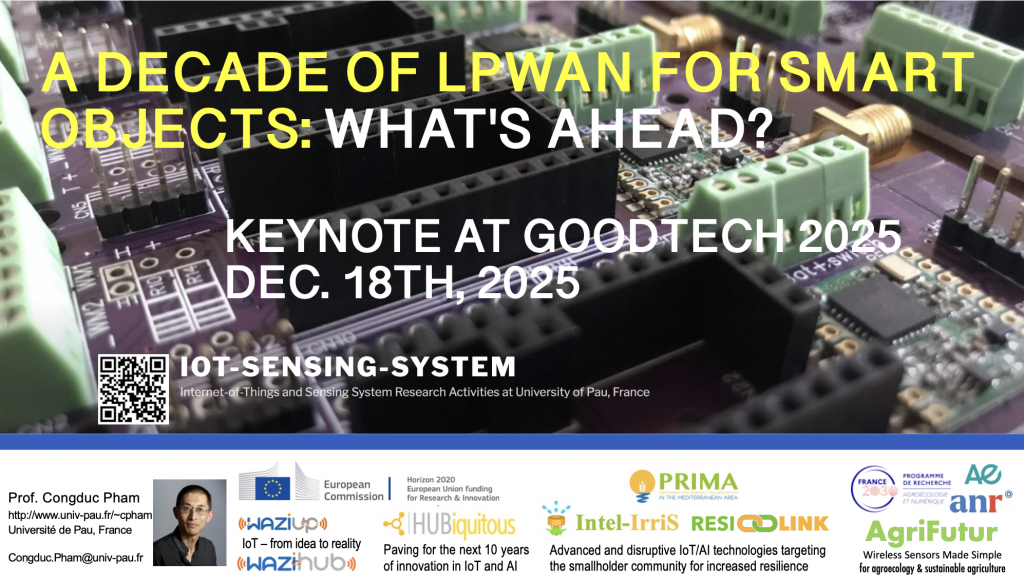
Dec. 18th, 2025. Prof. Congduc Pham, scientific leader of the Smart Wireless Sensors activities within the AgriFutur flagship project of the PEPR Programme, gave a keynote at the 11th EAI GOODTECH Conference entitled “A Decade of LPWANs for Smart Objects: What’s Ahead?“. After reviewing the main challenges behind LPWAN connectivity, the keynote presents the main technologies and how they will compete or evolve in this challenging ecosystem.
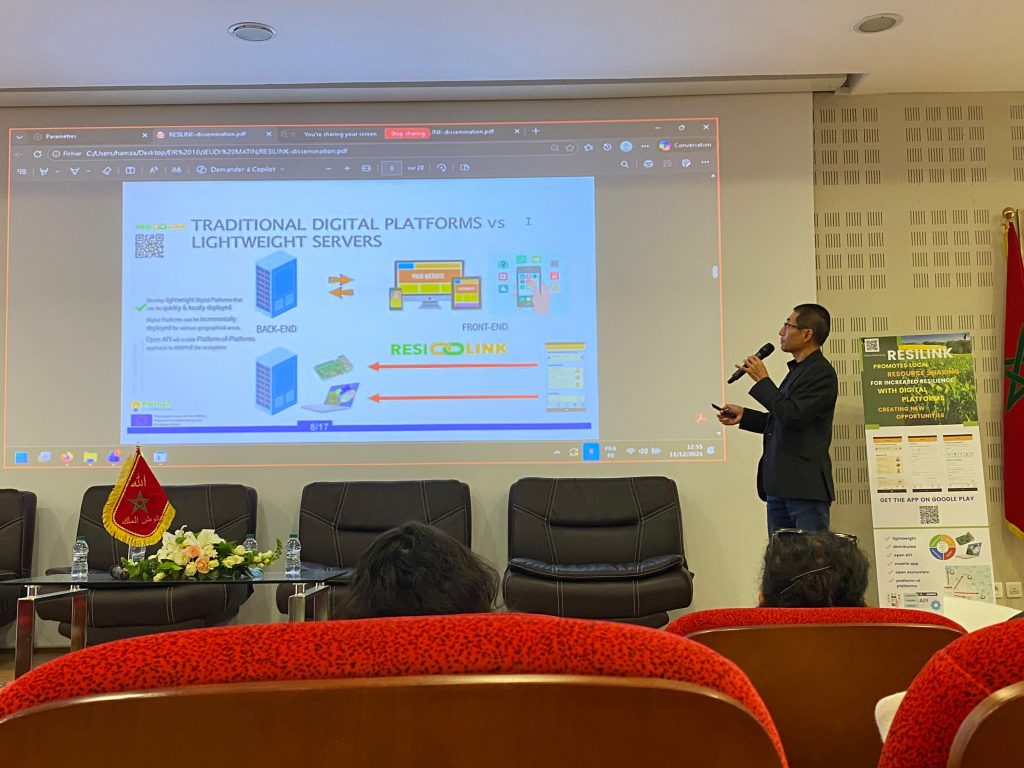
Dec. 11-13, 2025. Prof. Congduc Pham, scientific leader of the Smart Wireless Sensors activities within the AgriFutur flagship project of the PEPR Programme and also coordinator of the PRIMA RESILINK project, was invited to speak at two major international events in Agadir, Morocco: the 2nd Symposium on Mediterranean Fruit & Vegetables: Hub for Innovation, organized by the PRIMA InovFarmer.MED project, and the 10th International Research School (IRS) hosted by Ibn Zohr University.
This milestone 10th edition of the IRS focused on “Biotechnological Innovations and Agroecological Resilience: Towards Sustainable and Inclusive Mediterranean Territories.” Prof. Pham delivered a keynote address highlighting how digital technologies can strengthen collaboration and resilience across the agri-food value chain.
The events featured an outstanding lineup of keynotes and invited lectures from leading international researchers, showcasing cutting-edge research and innovation trends shaping the future of sustainable agriculture and agroecology. The scientific program, curated by the organizing committee, was exceptionally rich and inspiring!
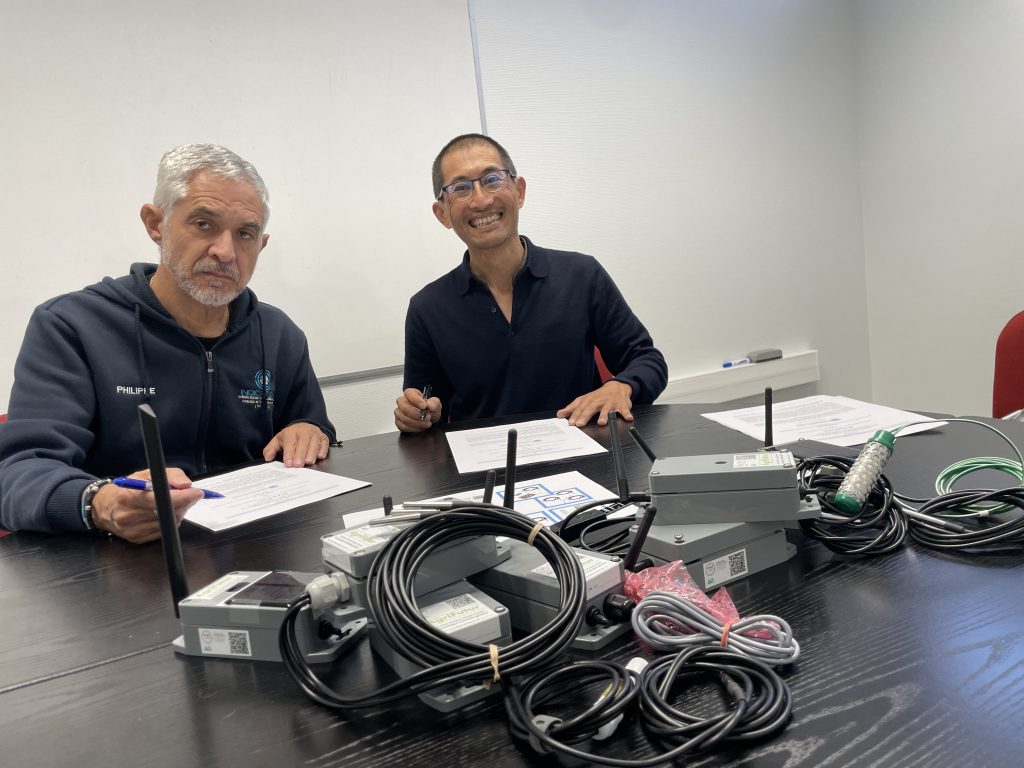
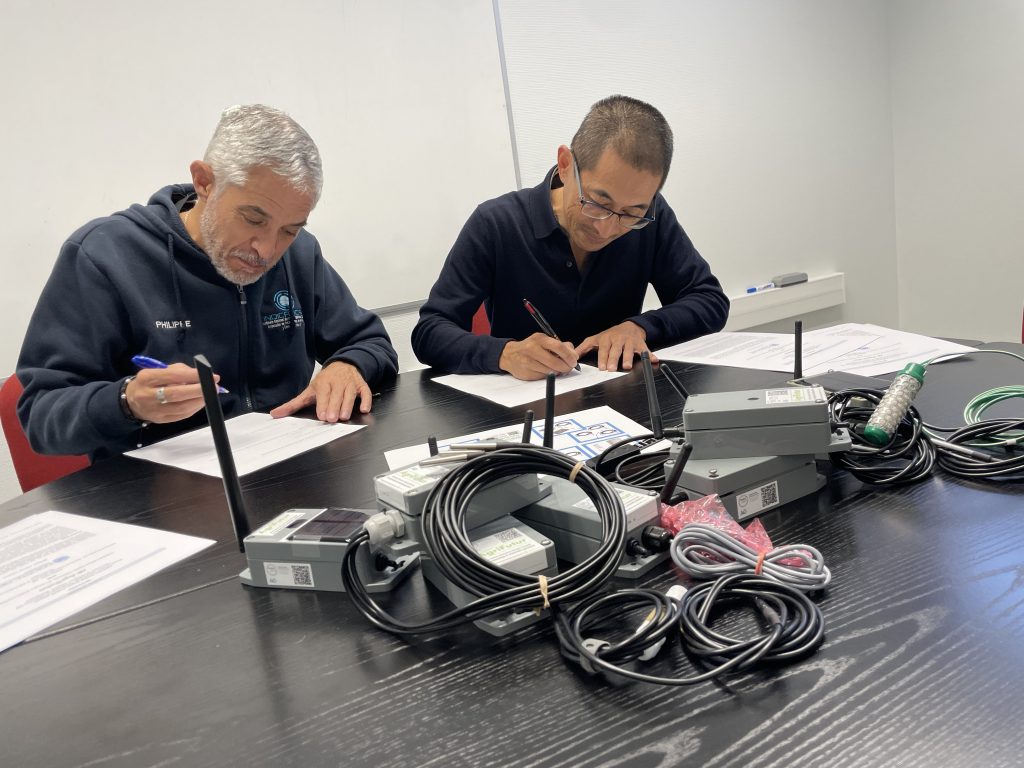
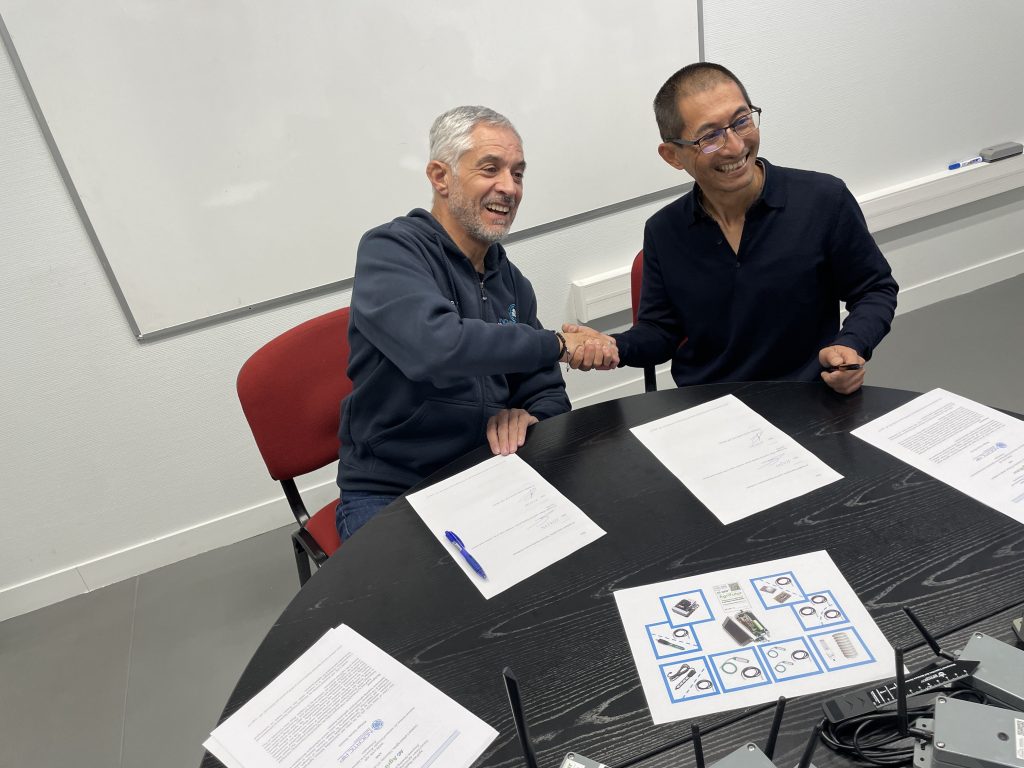
Dec. 1st, 2025. Pr Congduc Pham from UPPA and scientific leader of wireless smart sensors activities in the AgriFutur flagship project of the PEPR Program, and Pr Philippe Aniorté, Director of the INDICATIC AIP, the National Institute for Advanced Reasearch in Information and Communication Technologies of Panama, signed a Letter of Intent (LOI) to establish a Research & Development collaboration on wireless smart sensors technologies development and deployment targeting agroecological application domains with potential actions of:
sharing of know-how and organizing joint seminars/webinars between the AgriFutur project and INDICATIC AIP to support scientific dissemination on smart sensors solutions for agroecological applications;
identifying demonstration sites in Panama aligned with the testing and validation needs of AgriFutur’s smart sensors solutions;
deploying and evaluating specifically selected wireless smart sensors solutions of AgriFutur project on identified sites in Panama, including analysis of accuracy and performance and, where appropriate, comparison with reference sensing systems that can be deployed by INDICATIC AIP.
Adaptation to climate change and more sustainable agriculture are priorities in Panama and this collaboration received support from the French Ambassy in Panama which co-organized in March 2025 a scientific France-Panama event on innovation for sustainable agriculture. This LOI between the AgriFutur flagship project of the France2030 PEPR Program and INDICATIC AIP in Panama will open opportunities for increased synergies between France and Panama in digital technologies for sustainable agriculture.
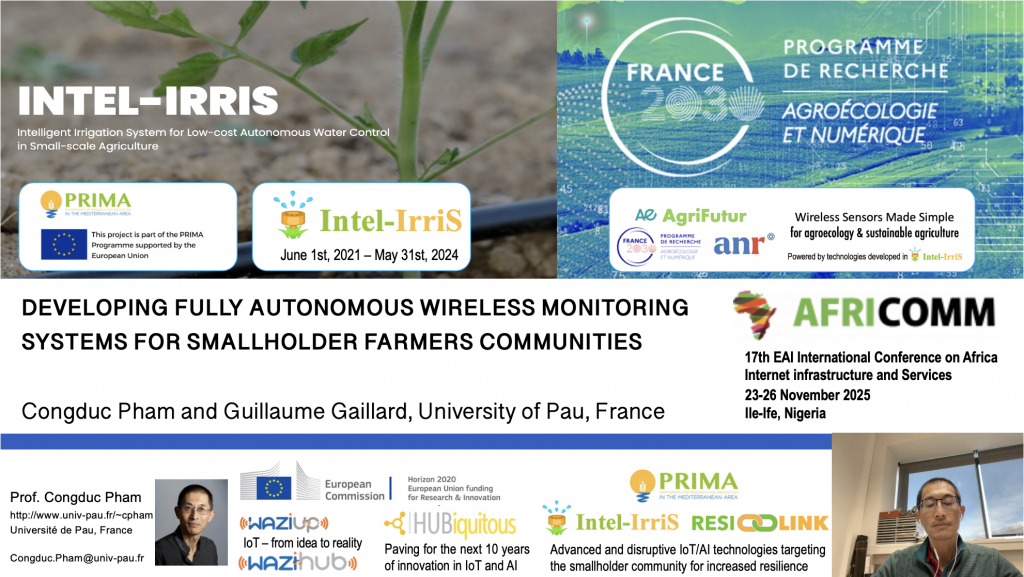
Nov. 25th, 2025. Pr. Congduc Pham, coordinator of PRIMA INTEL-IRRIS and in charge of developing the sensing system framework in PEPR AgriFutur, presented a synthesis of sensing technologies initially developed in INTEL-IRRIS and that will be extended and further deployed for agroecology applications in AgriFutur the Africomm’2025 conference. You can download the following resources:
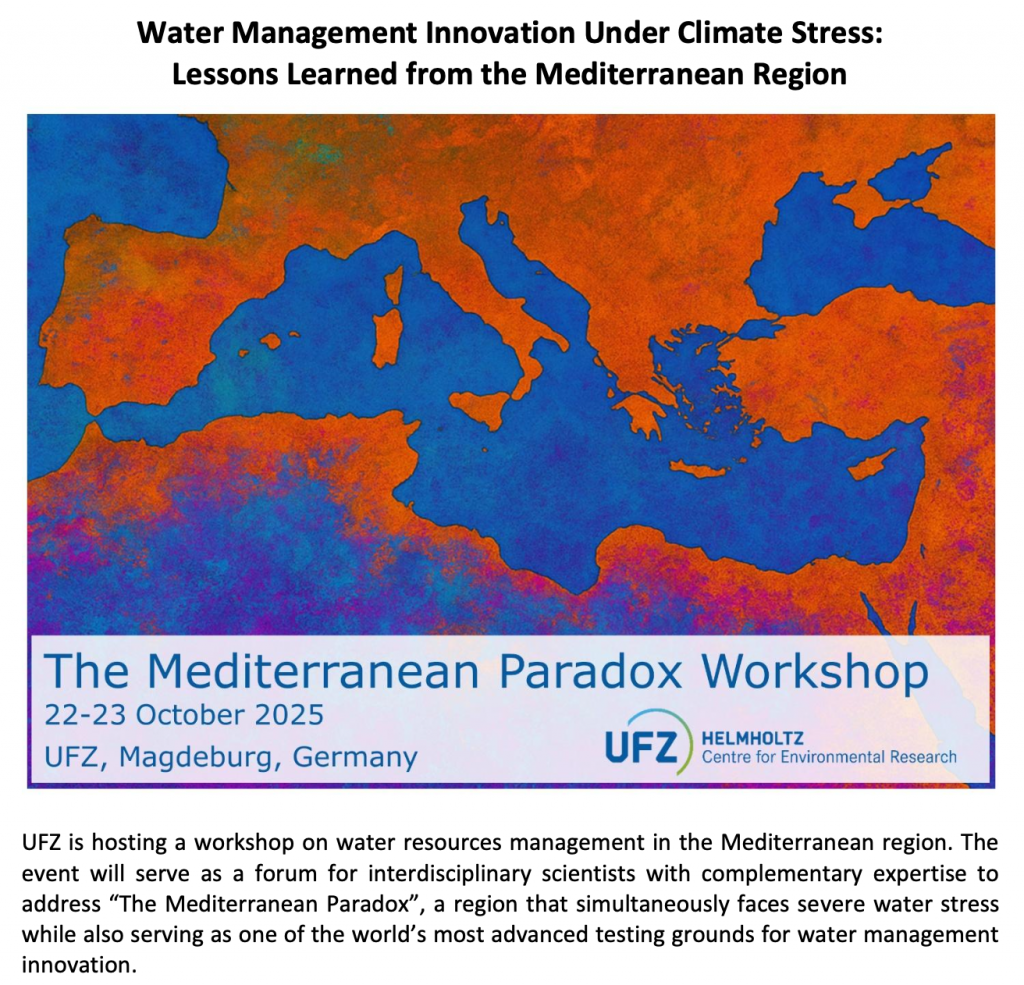
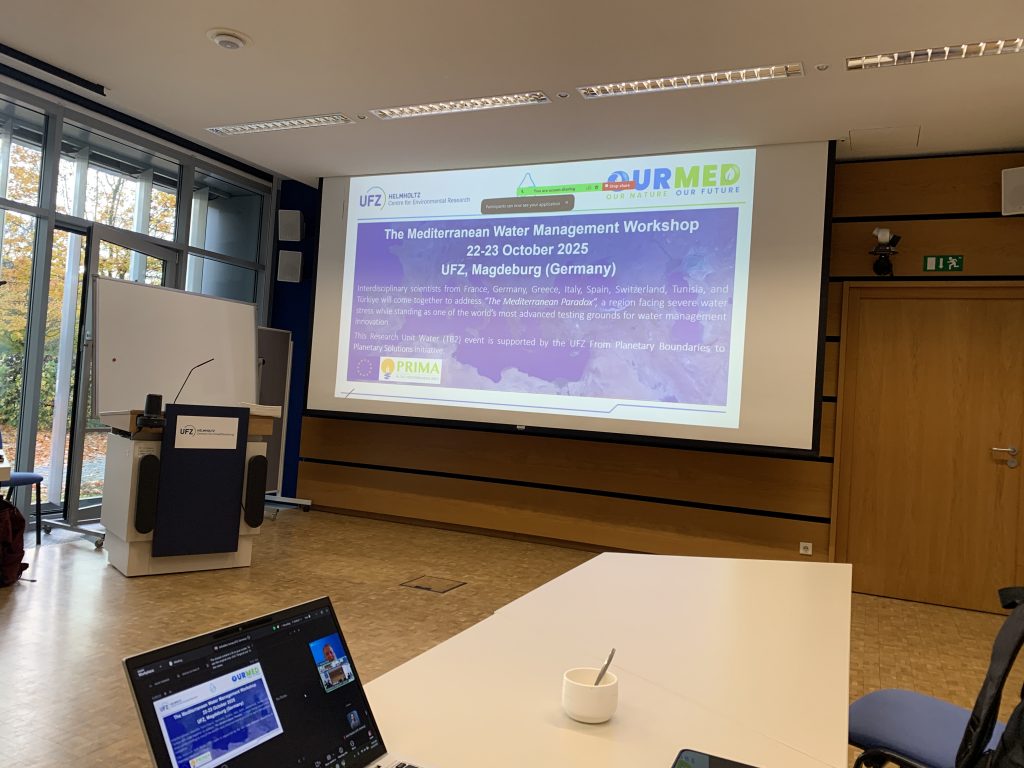
Oct. 22-23, 2025. Pr. Congduc Pham, who coordinated PRIMA INTEL-IRRIS and is leading the activities related to sensing systems in AgriFutur, was invited to participate to the Mediterranean Water Management Workshop organized by UFZ in Magdeburg, Germany. The event will serve as a forum for interdisciplinary scientists with complementary expertise to address “The Mediterranean Paradox”, a region that simultaneously faces severe water stress while also serving as one of the world’s most advanced testing grounds for water management innovation.
The cost-efficient sensing system that has been developed by INTEL-IRRIS and extended in AgriFutur will be presented as a opportunity to quickly deploy real-time monitoring infrastructures to feed data into digital models and tools such Digital Twins.
May 19th, 2025. 3 master 1 students from UPPA worked since February on an assignment to investigate how embedded AI can be brought to the ESP32S3 platform. The objective is to add image classification to the LoRaCAM-AI device we are developing in AgriFutur to capture more complex biodiversity indicators. On May 19th, they presented the 3 approaches they were asked to investigate: (i) with Edge Impulse platform and toolchain, (ii) with TensorFlow toolchain and (iii) with native ESP-DL library.
From right to left: AIT YAHIATENE Melissa, MATTE Quentin and ANSQUER Ewen.
Apr. 2nd, 2025. Prof. C. Pham presented the activities related to sensing systems in AgriFutur to the INDICATIC AIP research team in Panama. This meeting was a follow-up of the event organized by the French embassy. The objectives are to create synergies and share experience in deploying advanced sensing systems for environmental surveillance applications. It is foreseen to have a pilot in Panama where both teams could complement each other to have both high-end and cost-effective sensing systems. Download the presented slides.
Mar. 31st, 2025. Prof. C. Pham, who coordinatd the PRIMA INTEL-IRRIS project and who is leading the IoT sensor activities in AgriFutur, has been invited by the French Embassy in Panama, to present the methodology, the results and lessons learnt when building & deploying cost-effective sensors at a scientific France-Panama event co-organized by the French Ambassy on innovation for sustainable agriculture. See this post for more information as well as links to the presentation and recorded video.
Mar. 3rd, 2025. The integration of LoRaCAM-AI on gateway side is progressing fast! The gateway receives the image packets, along with statistics on the image, then it display of the last received image is integrated into the Home Assistant dashboard.
We are also introducing the new AgriFutur device sticker that of course acknowledges the work realized in the seminal PRIMA INTEL-IRRIS project that developed many of the software building blocks for the sensor and the gateway components.
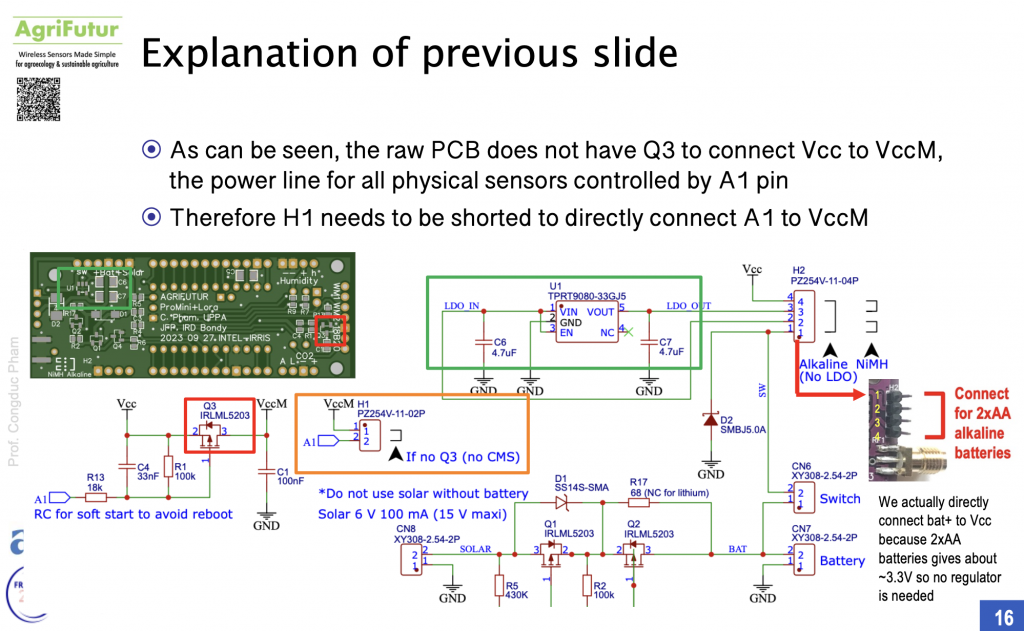
Feb. 26th, 2025. The PCBs to build the Generic Sensor Platform are now available. Based on the work conducted in the PRIMA INTEL-IRRIS project, the PCBs have been rebranded for AgriFutur and the control software is improved to support a much wider range of physical sensors. All manufacturing files to order the fully assembled PCB from PCB manufacturers are available on thePEPR AgriFutur GitHub.
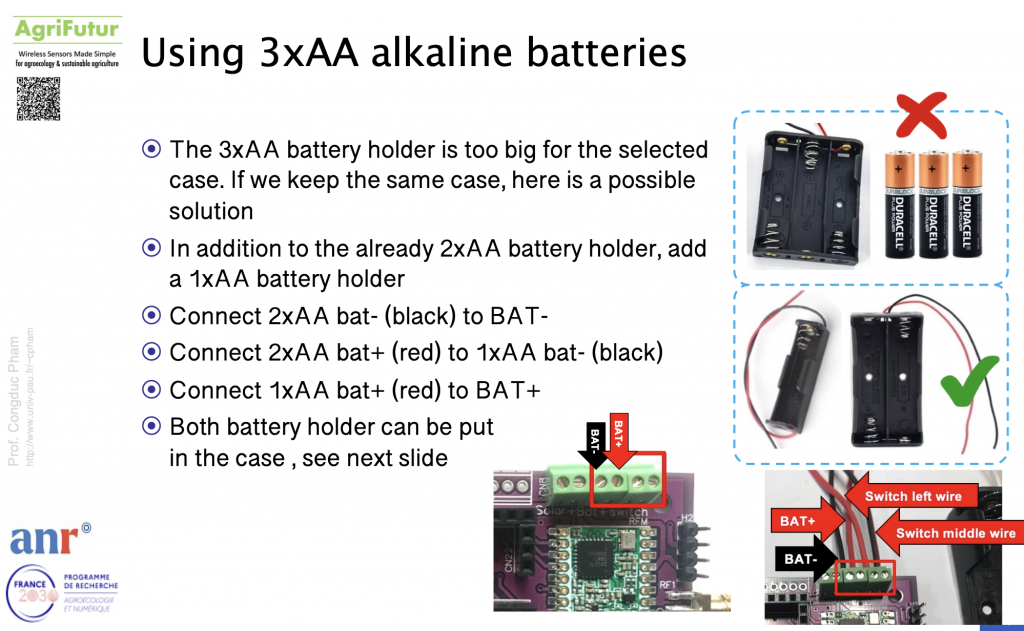
Feb. 14th, 2025. Integration of LoRaCAM-AI is almost at its final stage with the low power mode validated! In the photos below, a Li-Ion 3.7V pack is used as well as a version with a 18650 battery. 3xAA batteries (about 4.8V) is also a possible solution that does not require special batteries. It is actually just fine to inject 4.8V into the Arduino Pro Mini even with the regulator removed. However, the current case that we use in most of our IoT deployment (the 115x65x40 case is from Gotronic) can not hold 3xAA batteries. We may test with a bigger case (115x65x55 from Gotronic) just to try. Have a look at all the diagrams and explanations on our LoRaCAM-AI GitHub.
In this video, the LED on the XIAO ESP32-S3 Sense will blink as follows: (1) after power up and an image is ready for encoding and transmission, the LED will slowly blink twice; (2) each time a packet has been successfully transmitted the LED will blink once; (3) when all packets have been transmitted, the LED will again slowly blink twice. The power will be managed by an external Arduino Pro Mini which LED will blink as follows: (1) after power on, and after each wake up, the LED will blink 5 times fast; (2) each time that the activity pin from the ESP32 goes below the defined activity threshold, the LED will blink once; (3) when the activity pin has been below the activity threshold for at least 2s, the LED will slowly blink 4 times, indicating that the power to the ESP32 is going to be cut. This is when the Arduino Pro Mini will go in deep sleep for typically 1 hour.
Feb. 4th, 2025. Invited to give a keynote at the “Use and Sharing of Data” session at the World Fira 2025 exhibition, Pr. Congduc Pham show the objective of developing a wide range of sensor systems to be deployed out-of-the-box to better qualify and quantify agroecological practices. Get the slides in .pdf.
Jan. 29th, 2025. The LoRaCAM-AI integration is getting better!
Jan. 24th, 2025. The PEPR AgriFutur GitHub lists the following contents:
code for a Generic Sensor Platform, extending the soil humidity sensor developed in the PRIMA INTEL-IRRIS project, to build a larger variety of environmental sensors to better monitor agroecological systems
a PoC of a smart image sensor device (LoRaCAM-AI) based on XIAO ESP32-S3 Sense with an OV2640 camera capable of periodically capturing and transmitting with LoRa radio a small size image, typically 128×128, in a robust encoding image format. Proper casing for outdoor deployment will follow.
code for the image tool chain used to test image encoding, transmission with packet drops and finally decoding back into BMP
The LoRa radio module is a Modtronix inAir9 (868MHz band) based on Semtech SX1276 chip. We actually bought many of them, back in 2015 when we started our activities on LoRa and when these radio modules were one of the first LoRa modules available on the market. Then, for integration purposes, we moved to the RFM95 radio modules that can be soldered on PCBs. So it is good that we can give these modules a second life as with the XIAO ESP32S3 Sense there is little need to design a custom PCB for integration purpose.
Dec. 2024. During the whole December month, we tested various ESP32 camera board to finally select the XIAO ESP32-S3 Sense board! The main criterion was to have enough pins left to connect an SPI LoRa radio module. 3 boards offer this capabilities: `Freenove ESP32-S3 WROOM`, `Freenove ESP32 WROVER v1.6` and `XIAO ESP32-S3 Sense`. The choice was finally set to the `XIAO ESP32-S3 Sense` which has a huge developer community and enough resource to run embedded AI processing that we want to add in the future in a quite compact format.
Nov. 24th, 2024. The GitHub repository for all the development we will be conducting in the PEPR AgriFutur project has been created: https://github.com/CongducPham/PEPR_AgriFutur
Oct. 31st, 2024. The AgriFutur projet will most likely start officially on Feb. 1st, 2025. Stay tuned for news to come!